10 Microscopic Images Inside the Human Body

Almost all of the following images were captured using a scanning electron microscope (SEM), a type of electron microscope that uses a beam of high-energy electrons to scan surfaces of images. The electron beam of the SEM interacts with atoms near or at the surface of the sample to be viewed, resulting in a very high-resolution, 3D-image. Magnification levels range from x 25 (about the same as a hand lens) to about x 250,000. Incredible details of 1 to 5 nm in size can be detected.
Max Knoll was the first person to create an SEM image of silicone steel in 1935; over the next 30 years, a number of scientists worked to further develop the instrument, and in 1965 the first SEM was delivered to DuPont by the Cambridge Instrument Company as the “Stereoscan.”
Here you’ll experience the power of SEM in a journey of self-discovery that starts in your head, travels down through the chest and ends in the bowels of the abdomen. Along the way, you’ll see what’s normal, what happens when cells are twisted by cancer and what it looks like when an egg meets sperm for the first time. You’ll never see yourself the same way again.

Coloured image of a 6 day old human embryo implanting
Image: Yorgos Nikas, Wellcome Images
And the cycle of life begins again: this 6 day old human embryo is beginning to implant into the endometrium, the lining of the uterus.


Sperm on the surface of a human egg
Image: Yorgos Nikas, Wellcome Images
Here’s a close-up of a number of sperm trying to fertilise an egg.

Human egg with coronal cells
Image: Yorgos Nikas, Wellcome Images
This image is of a purple, colour-enhanced human egg sitting on a pin. The egg is coated with the zona pellicuda, a glycoprotein that protects the egg but also helps to trap and bind sperm. Two coronal cells are attached to the zona pellicuda.

Villi of small intestine
Image: Professor Alan Boyde, Wellcome Images
Villi in the small intestine increase the surface area of the gut, which helps in the absorption of food. Look closely and you’ll see some food stuck in one of the crevices.

Lung cancer cells
Image: Anne Weston, Wellcome Images
This image of warped lung cancer cells is in stark contrast to the healthy lung in the previous picture.

Red blood cells
They look like little cinnamon candies here, but they’re actually the most common type of blood cell in the human body - red blood cells (RBCs). These biconcave-shaped cells have the tall task of carrying oxygen to our entire body; in women there are about 4 to 5 million RBCs per microliter (cubic millimeter) of blood and about 5 to 6 million in men. People who live at higher altitudes have even more RBCs because of the low oxygen levels in their environment.

Split end of human hair
Image: Liz Hirst, Wellcome Images
Regular trimmings to your hair and good conditioner should help to prevent this unsightly picture of a split end of a human hair.

Tongue with taste bud
Image: David Gregory & Debbie Marshall, Wellcome Images
This colour-enhanced image depicts a taste bud on the tongue. The human tongue has about 10,000 taste buds that are involved with detecting salty, sour, bitter, sweet and savoury taste perceptions.


 Tooth plaque
Image: David Gregory & Debbie Marshall, Wellcome Images
Brush your teeth often because this is what the surface of a tooth with a form of “corn-on-the-cob” plaque looks like.

Alveoli in the lung
Image: David Gregory & Debbie Marshall, Wellcome Images
This is what a colour-enhanced image of the inner surface of your lung looks like. The hollow cavities are alveoli; this is where gas exchange occurs with the blood.


Related Articles :

10 of the Most Oldest Trees Around the World

 Sunland Baobab Tree
With a name known to a copy of baobab situated in South Africa. The carbon test has given an approximate age of 6000 years old. An interesting fact to mention that the hollow of its trunk are home to a winery and a bar.

 Methuselah Tree
A 4,789 years old Great Basin bristlecone pine tree located in Inyo County, Cal, USA. Oldest currently living tree.

 
 Sarv-e-Abarkuh Tree
Is a 4,000 years old Mediterranean cypress tree located in Abarkuh, Yazd, Iran. Also known as ‘Zoroastrian Sarv’. Iranian have different religious believes regarding this tree.


Llangernyw-Yew Tree
About 4,000 years old. The ancient most Yew tree located in Llangernyw, Wales, UK. They are commonly found at cemeteries.  

 The Senator Tree
The Pond Cypress known as ‘The Senator’ which is believed to be 3,400 to 3,500 years old. Located in Longwood, Florida, USA. After being measure by Native Tree Society, it was of 5,100 cubic feet and longest of its kind. Destroyed by fire on January 16, 2012.

Patriarca de Floresta Tree
Also known as ‘Patriarca de Floresta’ tree of Brazil. One of the biggest trees in Atlantic Forest. It is said to be almost 3000 years old. Probably the oldest non-conifer in Brazil. Its name translates as 'Patriarch of the Forest'.

Alishan Sacred Tree
Believed to be 3000 years old. A Formosan cypress tree found in Alishan National Scenic Area, Chiayi, Taiwan. It is really sacred for the Buddhists living in Taiwan, Collapsed on July 1, 1997 following heavy rainstorms.

 Jhomon sugi Tree
Believed to be 2,170 – 7,200 years old. A Japanese cedar with 16.4 m girth. Exact dating is made difficult by the rotten core of the trunk. Located in Yakushima , Japan. Its name is a reference to the Jhōmon period of Japanese prehistory.
 
Oliveira de Santa Iria de Azoia
 A 2,850 years old tree. Magnific Olive tree, probably the last one from a big olive grove. UTAD University and now classified "Public interest tree" by the Portuguese National Forest Authority.

 Elia Bouybon Tree
Believed to be 2,000-5,000 years old. An olive species found in Kolymvari, Crete, Greece. Oldest olive tree in the world. Its name translates as 'Olive tree of Vouves'.


10 Scary Sea Monsters


Stonefish
Stonefish is extremely dangerous, live primarily above the tropic of Capricorn. The reef stonefish is the most widespread species of the stonefishes family, and is known to be found in the shallow tropical marine waters of the Pacific and Indian oceans, ranging from the Red Sea to the Queensland Great Barrier Reef. They are carnivorous ray-finned fish with venomous spines that lives on reef bottoms, camouflaged as a rock. They are the most venomous known fish in the world.


Fossil fish Coelacanth 
Coelacanths belong to the subclass Actinistia, a group of lobed-finned fish that are related to lungfish and certain extinct Devonian fish such as osteolepiforms, porolepiforms, rhizodonts, and Panderichthys. Coelacanths were thought to have gone extinct in the Late Cretaceous, but were rediscovered in 1938 off the coast of South Africa. Latimeria chalumnae and the Latimeria menadoensis are the only two living coelacanth species, which are found along the coastlines of the Indian Ocean. The coelacanth has been nicknamed a “living fossil”, because it originally was known only through fossils, long before the first discovery of a live specimen. The coelacanth is thought to have evolved into roughly its current form approximately 400 million years ago.


Dragon fish 
Deep water fish species, a quiet fearsome predator with a slim body and large head and sharp fang-like teeth, eating smaller fish. Their gut is heavily pigmented, so that any luminescent organs in their prey cannot shine through their bodies and attract larger predators.


Blue-ringed Octopus
The blue-ringed octopuses is a tiny cephalopod that packs a lethal punch, are three octopus species that live in tide pools and coral reefs in the Pacific Ocean and the Indian Ocean, from Japan to Australia. They are currently recognized as one of the world's most venomous marine animals. Despite their small size and relatively docile nature, they can prove a danger to humans. They can be recognized by their characteristic blue and black rings and yellowish skin. When the octopus is agitated, the brown patches darken dramatically, and iridescent blue rings or clumps of rings appear and pulsate within the maculae. Typically 50-60 blue rings cover the dorsal and lateral surfaces of the mantle. They hunt small crabs, hermit crabs, and shrimp, and may bite attackers, including humans, if provoked.


Fang tooth fish
The fang tooth fish is a sea monster creature that looks so scary. It has only about 6 inches long, and has a large head, long teeth, and you cannot find it easy, because it lives in depths water of approximately 5,000 meters.

Killer Whales 
The killer whale, commonly referred to as the orca whale or orca, and less commonly as the blackfish, is a toothed whale belonging to the oceanic dolphin family. Killer whales are found in all oceans, from the frigid Arctic and Antarctic regions to tropical seas. Killer whales as a species have a diverse diet, although individual populations often specialize in particular types of prey. Some feed exclusively on fish, while others hunt marine mammals such as sea lions, seals, walruses and even large whales. Killer whales are regarded as apex predators, lacking natural predators.


Anglerfish
Anglerfishes are bony fishes named for their characteristic mode of predation, wherein a fleshy growth from the fish's head acts as a lure; this is considered analogous to angling. Some anglerfishes are pelagic (live in the open water), while others are benthic (bottom-dwelling). Some live in the deep sea and others on the continental shelf. They occur worldwide. Pelagic forms are most laterally (sideways) compressed whereas the benthic forms are often extremely dorsoventrally compressed (depressed) often with large upward pointing mouths.


Spider Crab
Tall-footed crab, is a species of marine crab that lives in the waters around Japan. It has the largest leg span of any arthropod, reaching up to 3.8 metres (12 ft) and weighing up to 41 pounds (19 kg). It is the subject of small-scale fishery..


Sperm Whales
The sperm whale is the largest species of toothed whale, with adult bulls (males) growing to be about 15–18 metres (49–59 ft) long, and weighing about 45–70 tonnes (44–69 long tons; 50–77 short tons). The two kogiid species are much smaller, at only around 2.5 to 3.5 metres (8 ft 2 in to 11 ft 6 in) in length, and weighing 350–500 kilograms (770–1,100 lb).


Giant Squid
The giant squid is a deep-ocean dwelling squid in the family Architeuthidae, represented by as many as eight species. Giant squid can grow to a tremendous size recent estimates put the maximum size at 13 metres for females and 10 metres for males from caudal fin to the tip of the two long tentacles (second only to the colossal squid at an estimated 14 metres, one of the largest living organisms). The mantle is about 2 metres long (more for females, less for males), and the length of the squid excluding its tentacles is about 5 metres. Claims of specimens measuring 20 metres or more have not been scientifically documented.

10 Most Expensive Engagement/Wedding Rings

When it comes to romance, wedding or engagement rings speak volumes. Here are the top ten most expensive engagement rings to let you know how the celebrities showered love symbolically for their ladylove.

#1 Paris Hilton , $4.7 million
Hilton’s engagement with Paris Kasidokostas Latsis on May 25th 2005 was indeed a sweet and memorable affair of short span. The couple tied the nuptial knot in spring where Paris Latsis was found, showering his love with a 24 carat emerald-cut diamond engagement ring.

#2 Donald Trump , $3 million
The fifteen-carat jaw-dropping engagement ring that came from Graff jeweler was especially meant for 33-year old model Melania Knauss. Slipping a gigantic 15-carat diamond ring, worth 3 million dollars, to Melania Knauss’s finger for their engagement in 2004, the billionaire proudly advertised that it was the most expensive engagement rings in the history.

#3 Jacqueline Kennedy Onassis , $2.6 million
The eye-catching, million-dollar ring took the whole country by surprise. According to reports, Jacqueline was seen wearing the ring two times, which later, she locked up in a New York bank vault. It is a well-known fact that her engagement ring from Onassis was later sold for $2.6 million at an auction of the Estate of Jack at Sotheby’s.

#4 Michael Douglas , $2 million
Michael Douglas was married to Welsh actress, Catherine Zeta Jones in 2000 in New York City. The couple exchanged their vows in tight secrecy. There the security was so tight that even the guests were asked to show their invitation cards at the entrance, gifting her 10-carat marquise cut antique diamond engagement ring, estimated value of over 2 million dollars.

#5 Tom Cruise , $1.5 million
Katie’s wedding ring is stunning enough to astound everyone. It is a perfect replica to the star-studded romance. The five-carat oval shaped diamond engagement ring of Katie set in platinum and rose gold was similar of art deco rings, with its focus on a large center stone bedded in a pave setting. This unique platinum rose gold setting enhances the antique styled ring, blending a personalized element to a very popular look.


#6 Jennifer Lopez , $1.2 million
If it is Jennifer Lopez, how can Ben Affleck stay miser? Ben Affleck beautified the list when he made headlines by dropping over 1.2 million dollars on Jenifer Lopez’s engagement ring. The ring exhibited a jaw dropping 6.1 carat Harry Winston, pink diamond. They were engaged to be married in 2004 but just months before they were due to marry; the whole affair was called off. The couple’s romance and wedding plans spread in the air in 2004.

#7 Prince Charles , $1 million
When Prince Charles offered his heartfelt feelings to Camilla Parker on bended knee, he was seen holding a square cut diamond ring, worth an estimated 1 million dollars. Yes, that’s why they say love exceeds all estimates!


#8 Charlie Sheen , $550,000
In Brooke Mueller’s wedding, her fiancé Charlie Sheen placed a huge radiant cut, yellow diamond engagement ring worth $550,000 on her finger when the couple stepped into the engagement.


#9 Eva Longoria , $500,000
When Tony Parker decided to propose to Eva Longoria, he appointed famed jeweler Jean Dousset to create an original emerald cut diamond ring with an estimated value of over 500,000 dollars.The wedding took place at a 17th Century Castle in France. The bride sported an Angel Sanchez mermaid gown embroidered with a silk metallic and a 5-foot long train.


#10 Jennifer Garner , $500,000
Ben Affleck bought Jennifer Garner a $500,000, 4.5 carat Harry Winston engagement ring as compared to the 6.1 carat pink diamond ring from Winston that he got for his former fiancée, Jennifer Lopez. However, reports reveal, that Garner’s engagement ring was reportedly much cheaper than that of predecessors.


10 of World's Most Inspirational People

 Nick Vujicic

A man with no limbs who teaches people how to get up
Nick Vujicic was born in Melbourne, Australia with the rare Tetra-amelia disorder:
limbless, missing both arms at shoulder level, and having one small foot with two toes protruding from his left thigh.Despite the absence of limbs, he is doing surf and swimming, and playing golf and soccer.Nick graduated from college at the age of 21 with a double major in Accounting and Financial Planning.He began his travels as a motivational speaker, focusing on the topics that today's teenagers face.

Nando Parrado

Survived airplane crash and 72 days in the Andes
72 - Days of ordeal, Nando Parrado and other survivors of a plane crash in the Andes had to endure before being rescued. Flying over the mountains on a Friday the 13th, the young men and their families who boarded the charter plane joked about the unlucky day when the
plane's wing hit the slope of the mountain and crashed. On impact, 13 passengers were
instantly dead while 32 others were badly wounded. Hoping to be rescued, the survivors waited in the freezing -37C temperature, melting snow for drinks and sleeping side by side to keep themselves warm. Food was so scarce, everyone had to pool whatever food they can find for a rationed pool. 9 days after the crash, due to dire desperation and hunger, the survivors called for an important meeting. One member proposed that they eat the dead. The 2 hours meeting ended with a conclusion. If any of them died in the Andes, the rest had the permission to use the corpse as food. After 2 weeks, their hope of being found dashed when they found out via their radio transistor that the rescue effort was called off.
On the 60th day after the crash, Nando Parrado and 2 other friends decided to walk through the icy wilderness for help. By the time they left, Nando Parrado said, the crash site was “.. an awful place, soaked in urine, smelling of death, littered with ragged bits of human bone and gristle”. Wearing 3 pairs of jeans and 3 sweaters over a polo shirt, he and his friends trekked the mountains with human flesh as their ration. Knowing that they must search for rescue, the team endured frozen snow, exhaustion and starvation, walking and climbing for 10 days before finding their way to the bottom of the mountain. The team was finally helped by a Chilean farmer who called the police for help. Parrado then guided the rescue team via a helicopter to the crash site. On the 22nd December 1972, after enduring 72 brutal days, the world found out that there were 16 survivors who cheated death, in the mountain of Andes. 8 of the initial survivors died when an avalanche cascaded down on them as they slept in the fuselage. During the ordeal, Nando Parrado lost 40 kg of his weight. He lost half his family in the crash. He is now a motivational speaker.

Jessica Cox

Became the first pilot with no arms, proving you don't need 'wings' to fly.
Jessica Cox suffered a rare birth defect and was born without any arms. None of the prenatal tests her mother took showed there was anything wrong with her. And yet she was born with this rare congenital disease, but also with a great spirit. The psychology graduate can write, type, drive a car, brush her hair and talk on her phone simply using her feet. Ms Cox, from Tuscon, Arizona, USA, is also a former dancer and double black belt in Tai Kwon-Do. She has a no-restrictions driving license, she flies planes and she can type 25 words a minute.
The plane she is flying is called an Ercoupe and it is one of the few airplanes to be made and certified without pedals. Without rudder pedals Jessica is free to use her feet as hands. She took three years instead of the usual six months to complete her lightweight aircraft licence, had three flying instructors and practiced 89 hours of flying, becoming the first pilot with no arms.

Sean Swarner

First cancer survivor to complete the 7-summits, the highest peaks of the 7 continents
The 29,035-foot giant known as Mount Everest tortures its challengers with life-threatening conditions such as 100 mph winds, the dramatic loss of oxygen, snowstorms, and deadly avalanches. Climbers of Everest are faced with incredible dangers, but for Sean Swarner the obstacles he overcame prior to his summiting make his story even more compelling.
Sean isn't just a cancer survivor; he is truly a medical marvel. He is the only person in the world ever to have been diagnosed with both Hodgkin's disease and Askin's sarcoma. He was diagnosed in the fourth and final stage of Hodgkin's disease at the age of thirteen, when doctors expected him to live for no more than three months. He overcame his illness only to be stricken a second time when a deadly golf ball-sized tumor attacked his right lung.
After removal of the Askin's tumor, Sean was expected to live for less than two weeks. A decade later and with only partial use of his lungs, Sean became famous for being the first cancer survivor to climb Mount Everest. After the summit of Everest, Sean had the desire and dream to continue moving forward and reaching people around the world. Climbing the highest mountain on each continent became his next goal. Proving to others that anything is possible, Sean successfully summited Mt. McKinley, to be the first cancer survivor to complete the seven summits. You can read more about Swarner's story on his 2007 book.

Randy Pausch

Inspired thousands of people with his dying speech.
Randolph Frederick "Randy" Pausch (October 23, 1960 – July 25, 2008) was an American professor of computer science and human-computer interaction and design at Carnegie Mellon University (CMU) in Pittsburgh, Pennsylvania. Pausch learned that he had pancreatic cancer, a terminal illness, in September of 2006. He gave an upbeat lecture entitled "The Last Lecture: Really Achieving Your Childhood Dreams" on September 18, 2007 at Carnegie Mellon, which became a popular YouTube video and led to other media appearances. He then co-authored a book called "The Last Lecture" on the same theme, which became a New York Times best-seller. Pausch died of complications from pancreatic cancer on July 25, 2008. In his famous speech, Pausch showed a list of his childhood dreams, and explained how he achieved each of them. His dreams were: being in zero gravity, playing in the National Football League, being the author of a World Book Encyclopedia article, meeting and being Captain Kirk, being "one of the guys who won the big stuffed animals in the amusement park", and becoming a Disney Imagineer.
He was given 3 months of life, he lived 3 more years.

Ben Underwood

The boy who could “see” with his ears
Ben Underwood was a remarkable teenager, who loved to skateboard, ride his bicycle and play football and basketball. For the most part, the Californian 14-year-old was just like other kids his age. What made Underwood remarkable was his ability to master these activities despite the fact that he was blind. Underwood had both eyes removed after being diagnosed with retinal cancer at age two. To most people's amazement upon meeting him, he seemed completely unfazed by his lack of sight, defying common stereotypes about blindness as a disability. So how did he do it? The answer is echolocation: the sonar navigation technique used by bats, dolphins, several other mammals and some birds. As Underwood moved about, he habitually made clicking noises with his tongue; these sounds bounced off surfaces and, with each return, added to Underwood's perception of his surroundings. He was so good at it that he could tell the difference between a fire hydrant and a rubbish bin, distinguish between parked cars and trucks, and — if you took him to a house he had never been to before — he would tell you he could 'see' a staircase in that corner and a kitchen in the other. He could even distinguish between different materials.
An unflinching faith in God guided Ben and his mother during his last few months as cancer spread to Ben's brain and spine. He finally died on January 2009 at the age of 16.

Liz Murray

From Homeless To Harvard
Elizabeth "Liz" Murray was born September 23, 1980 the Bronx, New York, to poor, drug-addicted, HIV-infected parents. She became homeless just after she turned 15, when her mother died of AIDS, and her father moved to a homeless shelter. Murray's life turned around when she began attending the Humanities Preparatory Academy in Chelsea, Manhattan. Though she started high school later than most students, and remained without a stable home while supporting herself and her sister, Murray graduated in only two years. She was awarded a New York Times scholarship for needy students and accepted into Harvard University, matriculating in the fall semester of 2000. She left Harvard in 2003 to care for her sick father; she resumed her education at Columbia University to be closer to him until 2006 when he died of AIDS. As of May 2008, she was back at Harvard working towards her degree with plans to graduate with a degree in Psychology in June 2009.
Her life became a movie in 2003 and she now works as a professional speaker, representing the Washington Speakers Bureau. That same gutsy strength that pulled her from the streets now transforms the lives of others, from student groups to business audiences in need of inspiration to overcome their own obstacles.

Patrick Henry Hughes

Born blind and crippled, now "marches" in the Louisville marching band
Patrick is a remarkable young man who was born without eyes and without the ability to fully straighten his arms and legs, making him unable to walk. Additionally, two steel rods were surgically attached to Patrick's spine to correct scoliosis. Despite circumstances, Patrick has overcome these physical issues to excel as a musician and student. Patrick started playing the piano at the age of only nine months, and also plays the trumpet and sings. He even participates in the University of Louisville School of Music Marching and Pep Bands with help from his father (Patrick John Hughes), who tirelessly maneuvers his wheel chair through the formations with the other 220+ members of the Cardinal Marching Band.
A virtuoso pianist, vocalist and trumpet player, Patrick has won numerous competitions, as well as winning awards acknowledging the circumstances he has overcome to achieve these heights. He has been featured on ESPN, ABC-TV, Oprah, CBS-TV, The Ellen Show, Extreme Make Over Home Edition, FOX-TV, CSTV, NBC-TV, Million Dollar Round Table, The Grand Ole Opry, People Magazine, Sports Illustrated, Star Magazine, and many, many others.

Sudha Chandran

A celebrated dancer and a successful actress,
Sudha Chandran is a glaring example of winning spirit against adverse situations.
Losing part of her leg in an accident in the peak of her dancing career couldn’t hold back Sudha Chandran’s determination and passion for dancing. After amputation of her right leg, she got a prosthetic Jaipur foot. She started dancing again and performed on stage.
Her flourishing career also got her a chance to act in it and depict her own real life story in the movie –‘Mayuri’ in Telegu and Hindi version of it ‘Naache Mayuri’.

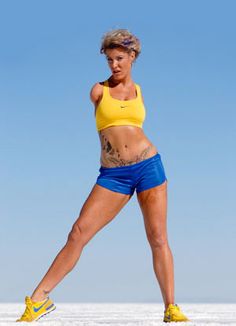
Barb Guerra
No arms courageous woman
A beautiful woman that had an operation when she was electrocuted where she lost her arms. She's a courageous woman and a wonderful mother! Amazing! This is one of the best performing of Barb - lots of footwork in this video.You can see how remarkable woman she is.

Propellerads

LinkWithin

Related Posts Plugin for WordPress, Blogger...