Showing posts with label Amazing. Show all posts

10 Stunning Tunnels Around the World


Guadarrama Tunnel
The Guadarrama Tunnel is part of the Spanish high speed rail network connecting Madrid and Valladolid and is one of the most important travel links in Spain. Crossing the Sierra de Guadarrama mountain peninsula, this double fornix tunnel is 16.5 miles long, with the widest of the two tunnels 33ft in diameter. The construction contract was signed in 2001, and work began soon after using a Tunnel Boring Machine, although progress was delayed by especially hard rock formations. The tunnel cost around $1.6 billion to build and upon completion, trains will be able to pass through at maximum speeds of 217mph.


Eiksund Tunnel
Although still under construction the Eiksund Tunnel in Norway is already the deepest underwater tunnel in the world at 942ft below sea level. At 4.8 miles long, the tunnel will service the areas of Heroy, Sande, Ulstein and Hareid. The reinforcement of this mammoth tunnel has already consumed around 172,000 square foot of concrete. More than 1,300 tonnes of explosives and a staggering 5 million blast holes were used to blast out the route. The tunnel was originally intended to be opened to the public in July of 2007, but numerous delays have pushed the date back into 2008.


Cu Chi Tunnel
As far as tunnels go, none can have had more impact on one country that the Cu Chi Tunnel network in Ho Chi Minh City, Vietnam. This 46.5 mile long system of secret tunnels was an invaluable asset to the Vietnamese in their war against the USA that functioned as a military base of operations, planning and storage for the National Front for the Liberation of South Vietnam’s infamous Tet Offensive in 1968. The network was also an invaluable communications link for NLF troops, and as time went by, developed from being merely a set of underground tunnels to contain kitchens, medical facilities and sleeping quarters; poor air quality and insect infestation made conditions extremely harsh. The tunnels have been properly reinforced and are open to tourists today as a war museum. The Cu Chi tunnel network was never actually officially commissioned, but building commenced in 1948 to defend against the French.


Gotthard Road Tunnel
It seems that in tunnel building the Swiss have found their calling (alongside chocolate and banks, of course), as the Gotthard Road Tunnel is one of the most heavily vehicle-travelled tunnels in the world. The Gotthard Road Tunnel comes in second behind its aforementioned compatriot the Lotschberg Base Tunnel in the list of the world’s longest land tunnels, with a total length of approximately 10.5 miles. As an important part of the Hamburg to Sicily transport route, estimates suggest the tunnel is used by at least 1.2 million trucks per annum, hence the chaos that ensued when two trucks collided in 2001 causing a fire within the tunnel, killing 11 people and closing the tunnel for the following two months. The tunnel now enforces a minimum 500ft distance between two lorries to avoid further catastrophe.


Serpukhovsko-Timiryazevskaya Line
Often omitted from tunnel lists as it is in fact a metro line, the Serpukhovsko-Timiryazevskaya Line’s 25.5 mile length makes it the longest subway route in the world, so we feel it deserves some recognition. Originally opened in 1983, the line has been the subject of numerous expansions and lengthening until it achieved its well deserved title in 2007. It cuts the city of Moscow completely into two on a north-south axis, and has a total of 25 stops along an extensive journey through the Russian capital.


Lotschberg Base Tunnel
Constructed to reduce heavy truck traffic on Swiss roads, the Lotschberg Base Tunnel allows vehicles to be loaded onto trains in Germany, carried through Switzerland and unloaded in Italy, as well as providing a quicker route for tourists skiing in the Alps. The world’s longest land tunnel was revealed in an opening ceremony in June 2007. It lies a further 400m under the existing Lotschberg Tunnel. The 21.5 mile tunnel aims to carry 110 trains a day, with tilt passenger trains able to pass through at a speed of 200mph.


Channel Tunnel
One of the most celebrated engineering achievements of the modern era, the Channel Tunnel aka Chunnel holds the records for having the longest undersea tunnel section in the world (23.5 miles). It is also the longest international tunnel in the world and the second longest rail tunnel, its 31.5 mile length falling short of the Seikan Tunnel’s benchmark. Although the idea to build a permanent route across the channel dates back over 200 years, the tunnel wasn’t opened to the public until 1994. It consists of three parallel tunnels catering for freight trains and vehicle shuttles, as well as perhaps most importantly providing a Eurostar link between London, Paris and Brussels. At the deepest point the Channel Tunnel is 197ft beneath the seabed, which helps explain the reported £10 billion over-run on construction. The company that runs the trains through the tunnel, Euro Tunnel, have been in debt practically from the start. However, the tunnel has been gaining in popularity as track improvements made on the line to improve speeds into central London have come online.


North East MRT Line
Singapore’s North East MRT Line became the world’s first completely underground, automated and driver-less rapid transit line when completed at a cost $5 billion in 2002. The 12.5 mile long track connects central Singapore with the north-eastern part of the island. Each of the 16 stations were designed individually by the Art in Transit project, so each station has a unique style and identity. It takes approximately 30 minutes to complete the journey along the 4ft, 8inch gauge track operated by the SBS Transit Limited. Plans to expand the whole MRT network are currently in motion.


Laerdal Tunnel
The Laerdal Tunnel in Norway is a real feat of engineering that provides an invaluable link between the Bergen area and Eastern Norway, especially as winter conditions make the 6,000ft tall surrounding mountains simply too difficult to cross. At 15.2 miles long the Laerdal Tunnel is the longest road tunnel in the world. 200,000 16.5ft steel bolts hold it place and 376,736 square feet of concrete was poured to support the ceilings and walls. The monotonous 20 minute drive is purposely interrupted by 3 large caverns, which allow for a change of scenery for the driver and a chance to rest when tired. It is also the only tunnel in the world to have its own air treatment plant, situated 6 miles from Aurland, which removes dust and nitrogen oxide from the tunnel’s air supply.


Seikan Tunnel
The 33.4 mile long Seikan Tunnel is the longest mixed use road / rail tunnel in the world to link the two Japanese islands of Honshu and Hokkaido. The track itself is sunk 747ft beneath the water, making it the deepest of its kind in the world. Commissioned in 1955 after turbulence on the Tsugaru Strait sunk a ferry and killed 1,430 passengers, usual tunnel boring machinery could not be used on unpredictable terrain underneath the water; workers used over 2,800 tonnes of explosives to painstakingly drill their way through a particularly earthquake prone area.The labourious process was eventually completed in 1983 at the expense of 34 lives and $5 billion.

10 Microscopic Images Inside the Human Body

Almost all of the following images were captured using a scanning electron microscope (SEM), a type of electron microscope that uses a beam of high-energy electrons to scan surfaces of images. The electron beam of the SEM interacts with atoms near or at the surface of the sample to be viewed, resulting in a very high-resolution, 3D-image. Magnification levels range from x 25 (about the same as a hand lens) to about x 250,000. Incredible details of 1 to 5 nm in size can be detected.
Max Knoll was the first person to create an SEM image of silicone steel in 1935; over the next 30 years, a number of scientists worked to further develop the instrument, and in 1965 the first SEM was delivered to DuPont by the Cambridge Instrument Company as the “Stereoscan.”
Here you’ll experience the power of SEM in a journey of self-discovery that starts in your head, travels down through the chest and ends in the bowels of the abdomen. Along the way, you’ll see what’s normal, what happens when cells are twisted by cancer and what it looks like when an egg meets sperm for the first time. You’ll never see yourself the same way again.

Coloured image of a 6 day old human embryo implanting
Image: Yorgos Nikas, Wellcome Images
And the cycle of life begins again: this 6 day old human embryo is beginning to implant into the endometrium, the lining of the uterus.


Sperm on the surface of a human egg
Image: Yorgos Nikas, Wellcome Images
Here’s a close-up of a number of sperm trying to fertilise an egg.

Human egg with coronal cells
Image: Yorgos Nikas, Wellcome Images
This image is of a purple, colour-enhanced human egg sitting on a pin. The egg is coated with the zona pellicuda, a glycoprotein that protects the egg but also helps to trap and bind sperm. Two coronal cells are attached to the zona pellicuda.

Villi of small intestine
Image: Professor Alan Boyde, Wellcome Images
Villi in the small intestine increase the surface area of the gut, which helps in the absorption of food. Look closely and you’ll see some food stuck in one of the crevices.

Lung cancer cells
Image: Anne Weston, Wellcome Images
This image of warped lung cancer cells is in stark contrast to the healthy lung in the previous picture.

Red blood cells
They look like little cinnamon candies here, but they’re actually the most common type of blood cell in the human body - red blood cells (RBCs). These biconcave-shaped cells have the tall task of carrying oxygen to our entire body; in women there are about 4 to 5 million RBCs per microliter (cubic millimeter) of blood and about 5 to 6 million in men. People who live at higher altitudes have even more RBCs because of the low oxygen levels in their environment.

Split end of human hair
Image: Liz Hirst, Wellcome Images
Regular trimmings to your hair and good conditioner should help to prevent this unsightly picture of a split end of a human hair.

Tongue with taste bud
Image: David Gregory & Debbie Marshall, Wellcome Images
This colour-enhanced image depicts a taste bud on the tongue. The human tongue has about 10,000 taste buds that are involved with detecting salty, sour, bitter, sweet and savoury taste perceptions.


 Tooth plaque
Image: David Gregory & Debbie Marshall, Wellcome Images
Brush your teeth often because this is what the surface of a tooth with a form of “corn-on-the-cob” plaque looks like.

Alveoli in the lung
Image: David Gregory & Debbie Marshall, Wellcome Images
This is what a colour-enhanced image of the inner surface of your lung looks like. The hollow cavities are alveoli; this is where gas exchange occurs with the blood.


Related Articles :

10 of World's Most Inspirational People

 Nick Vujicic

A man with no limbs who teaches people how to get up
Nick Vujicic was born in Melbourne, Australia with the rare Tetra-amelia disorder:
limbless, missing both arms at shoulder level, and having one small foot with two toes protruding from his left thigh.Despite the absence of limbs, he is doing surf and swimming, and playing golf and soccer.Nick graduated from college at the age of 21 with a double major in Accounting and Financial Planning.He began his travels as a motivational speaker, focusing on the topics that today's teenagers face.

Nando Parrado

Survived airplane crash and 72 days in the Andes
72 - Days of ordeal, Nando Parrado and other survivors of a plane crash in the Andes had to endure before being rescued. Flying over the mountains on a Friday the 13th, the young men and their families who boarded the charter plane joked about the unlucky day when the
plane's wing hit the slope of the mountain and crashed. On impact, 13 passengers were
instantly dead while 32 others were badly wounded. Hoping to be rescued, the survivors waited in the freezing -37C temperature, melting snow for drinks and sleeping side by side to keep themselves warm. Food was so scarce, everyone had to pool whatever food they can find for a rationed pool. 9 days after the crash, due to dire desperation and hunger, the survivors called for an important meeting. One member proposed that they eat the dead. The 2 hours meeting ended with a conclusion. If any of them died in the Andes, the rest had the permission to use the corpse as food. After 2 weeks, their hope of being found dashed when they found out via their radio transistor that the rescue effort was called off.
On the 60th day after the crash, Nando Parrado and 2 other friends decided to walk through the icy wilderness for help. By the time they left, Nando Parrado said, the crash site was “.. an awful place, soaked in urine, smelling of death, littered with ragged bits of human bone and gristle”. Wearing 3 pairs of jeans and 3 sweaters over a polo shirt, he and his friends trekked the mountains with human flesh as their ration. Knowing that they must search for rescue, the team endured frozen snow, exhaustion and starvation, walking and climbing for 10 days before finding their way to the bottom of the mountain. The team was finally helped by a Chilean farmer who called the police for help. Parrado then guided the rescue team via a helicopter to the crash site. On the 22nd December 1972, after enduring 72 brutal days, the world found out that there were 16 survivors who cheated death, in the mountain of Andes. 8 of the initial survivors died when an avalanche cascaded down on them as they slept in the fuselage. During the ordeal, Nando Parrado lost 40 kg of his weight. He lost half his family in the crash. He is now a motivational speaker.

Jessica Cox

Became the first pilot with no arms, proving you don't need 'wings' to fly.
Jessica Cox suffered a rare birth defect and was born without any arms. None of the prenatal tests her mother took showed there was anything wrong with her. And yet she was born with this rare congenital disease, but also with a great spirit. The psychology graduate can write, type, drive a car, brush her hair and talk on her phone simply using her feet. Ms Cox, from Tuscon, Arizona, USA, is also a former dancer and double black belt in Tai Kwon-Do. She has a no-restrictions driving license, she flies planes and she can type 25 words a minute.
The plane she is flying is called an Ercoupe and it is one of the few airplanes to be made and certified without pedals. Without rudder pedals Jessica is free to use her feet as hands. She took three years instead of the usual six months to complete her lightweight aircraft licence, had three flying instructors and practiced 89 hours of flying, becoming the first pilot with no arms.

Sean Swarner

First cancer survivor to complete the 7-summits, the highest peaks of the 7 continents
The 29,035-foot giant known as Mount Everest tortures its challengers with life-threatening conditions such as 100 mph winds, the dramatic loss of oxygen, snowstorms, and deadly avalanches. Climbers of Everest are faced with incredible dangers, but for Sean Swarner the obstacles he overcame prior to his summiting make his story even more compelling.
Sean isn't just a cancer survivor; he is truly a medical marvel. He is the only person in the world ever to have been diagnosed with both Hodgkin's disease and Askin's sarcoma. He was diagnosed in the fourth and final stage of Hodgkin's disease at the age of thirteen, when doctors expected him to live for no more than three months. He overcame his illness only to be stricken a second time when a deadly golf ball-sized tumor attacked his right lung.
After removal of the Askin's tumor, Sean was expected to live for less than two weeks. A decade later and with only partial use of his lungs, Sean became famous for being the first cancer survivor to climb Mount Everest. After the summit of Everest, Sean had the desire and dream to continue moving forward and reaching people around the world. Climbing the highest mountain on each continent became his next goal. Proving to others that anything is possible, Sean successfully summited Mt. McKinley, to be the first cancer survivor to complete the seven summits. You can read more about Swarner's story on his 2007 book.

Randy Pausch

Inspired thousands of people with his dying speech.
Randolph Frederick "Randy" Pausch (October 23, 1960 – July 25, 2008) was an American professor of computer science and human-computer interaction and design at Carnegie Mellon University (CMU) in Pittsburgh, Pennsylvania. Pausch learned that he had pancreatic cancer, a terminal illness, in September of 2006. He gave an upbeat lecture entitled "The Last Lecture: Really Achieving Your Childhood Dreams" on September 18, 2007 at Carnegie Mellon, which became a popular YouTube video and led to other media appearances. He then co-authored a book called "The Last Lecture" on the same theme, which became a New York Times best-seller. Pausch died of complications from pancreatic cancer on July 25, 2008. In his famous speech, Pausch showed a list of his childhood dreams, and explained how he achieved each of them. His dreams were: being in zero gravity, playing in the National Football League, being the author of a World Book Encyclopedia article, meeting and being Captain Kirk, being "one of the guys who won the big stuffed animals in the amusement park", and becoming a Disney Imagineer.
He was given 3 months of life, he lived 3 more years.

Ben Underwood

The boy who could “see” with his ears
Ben Underwood was a remarkable teenager, who loved to skateboard, ride his bicycle and play football and basketball. For the most part, the Californian 14-year-old was just like other kids his age. What made Underwood remarkable was his ability to master these activities despite the fact that he was blind. Underwood had both eyes removed after being diagnosed with retinal cancer at age two. To most people's amazement upon meeting him, he seemed completely unfazed by his lack of sight, defying common stereotypes about blindness as a disability. So how did he do it? The answer is echolocation: the sonar navigation technique used by bats, dolphins, several other mammals and some birds. As Underwood moved about, he habitually made clicking noises with his tongue; these sounds bounced off surfaces and, with each return, added to Underwood's perception of his surroundings. He was so good at it that he could tell the difference between a fire hydrant and a rubbish bin, distinguish between parked cars and trucks, and — if you took him to a house he had never been to before — he would tell you he could 'see' a staircase in that corner and a kitchen in the other. He could even distinguish between different materials.
An unflinching faith in God guided Ben and his mother during his last few months as cancer spread to Ben's brain and spine. He finally died on January 2009 at the age of 16.

Liz Murray

From Homeless To Harvard
Elizabeth "Liz" Murray was born September 23, 1980 the Bronx, New York, to poor, drug-addicted, HIV-infected parents. She became homeless just after she turned 15, when her mother died of AIDS, and her father moved to a homeless shelter. Murray's life turned around when she began attending the Humanities Preparatory Academy in Chelsea, Manhattan. Though she started high school later than most students, and remained without a stable home while supporting herself and her sister, Murray graduated in only two years. She was awarded a New York Times scholarship for needy students and accepted into Harvard University, matriculating in the fall semester of 2000. She left Harvard in 2003 to care for her sick father; she resumed her education at Columbia University to be closer to him until 2006 when he died of AIDS. As of May 2008, she was back at Harvard working towards her degree with plans to graduate with a degree in Psychology in June 2009.
Her life became a movie in 2003 and she now works as a professional speaker, representing the Washington Speakers Bureau. That same gutsy strength that pulled her from the streets now transforms the lives of others, from student groups to business audiences in need of inspiration to overcome their own obstacles.

Patrick Henry Hughes

Born blind and crippled, now "marches" in the Louisville marching band
Patrick is a remarkable young man who was born without eyes and without the ability to fully straighten his arms and legs, making him unable to walk. Additionally, two steel rods were surgically attached to Patrick's spine to correct scoliosis. Despite circumstances, Patrick has overcome these physical issues to excel as a musician and student. Patrick started playing the piano at the age of only nine months, and also plays the trumpet and sings. He even participates in the University of Louisville School of Music Marching and Pep Bands with help from his father (Patrick John Hughes), who tirelessly maneuvers his wheel chair through the formations with the other 220+ members of the Cardinal Marching Band.
A virtuoso pianist, vocalist and trumpet player, Patrick has won numerous competitions, as well as winning awards acknowledging the circumstances he has overcome to achieve these heights. He has been featured on ESPN, ABC-TV, Oprah, CBS-TV, The Ellen Show, Extreme Make Over Home Edition, FOX-TV, CSTV, NBC-TV, Million Dollar Round Table, The Grand Ole Opry, People Magazine, Sports Illustrated, Star Magazine, and many, many others.

Sudha Chandran

A celebrated dancer and a successful actress,
Sudha Chandran is a glaring example of winning spirit against adverse situations.
Losing part of her leg in an accident in the peak of her dancing career couldn’t hold back Sudha Chandran’s determination and passion for dancing. After amputation of her right leg, she got a prosthetic Jaipur foot. She started dancing again and performed on stage.
Her flourishing career also got her a chance to act in it and depict her own real life story in the movie –‘Mayuri’ in Telegu and Hindi version of it ‘Naache Mayuri’.

Barb Guerra
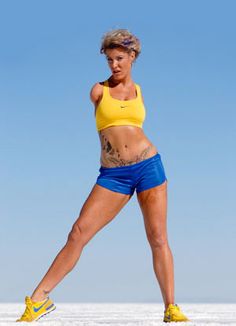
No arms courageous woman
A beautiful woman that had an operation when she was electrocuted where she lost her arms. She's a courageous woman and a wonderful mother! Amazing! This is one of the best performing of Barb - lots of footwork in this video.You can see how remarkable woman she is.

10 Amazing Facts About our Body


People who ride on roller coasters have a higher chance of having a blood clot in the brain.

Never hold your nose and cover your mouth when sneezing, as it can blow out your eyeballs.

A human eye blinks over 10,000,000 times a year !

The average person laughs about 15 times a day

An average human During SLEEP move 25.4 times 


An average human Speak 4,800 WORDS a day

An average human Produce 1.43 pints SWEAT a day

An average human Blood flows 16,80,000 miles a day


An average human Lungs respire 23,045 times a day

An average human heart beats 1,03,689 times a day


10 Amazing Photos of Google`s Data Centers

Few have seen data centers of Google, and this is for good reason, because the most important thing is the security of our data. Therefore, each center is carefully protected. Despite the large number of Google employees around the world, only a handful of insiders have access to the servers. Now you can see the first pictures, which depicted people, places and equipment that make running Google.

Now Google is building data centers in Hong Kong, Taiwan, Singapore and Chile.

By Google’s ‘Street View’ you can take a virtual tour of the data center in North Carolina.

Here is one of the server data center in Iowa, USA, where the routes and switches allow data centers to communicate with each other. Fiber optic cable connecting the server installed on the ceiling.

Even lines in the centers painted in  colors of Google. For these colorful pipes water travels around the center in Oregon. Blue – cold water supply pipe, red –   hot water.


In Hamina, Finland, Google has decided to restore the old paper mill and stay in its territory, close to the cool waters of the Gulf of Finland.

Google server center in Douglas, Iowa.

Dennis Harwood, Engineer of Google, diagnoses overheated CPU. For over 10 years, Google is building one of the world’s most powerful servers.

Google data center in Council Bluffs, Iowa, USA.

Each server has four interface cables marked in different colors. The colors in all centers are of Google standard that facilitates the work during maintenance.


Propellerads

LinkWithin

Related Posts Plugin for WordPress, Blogger...